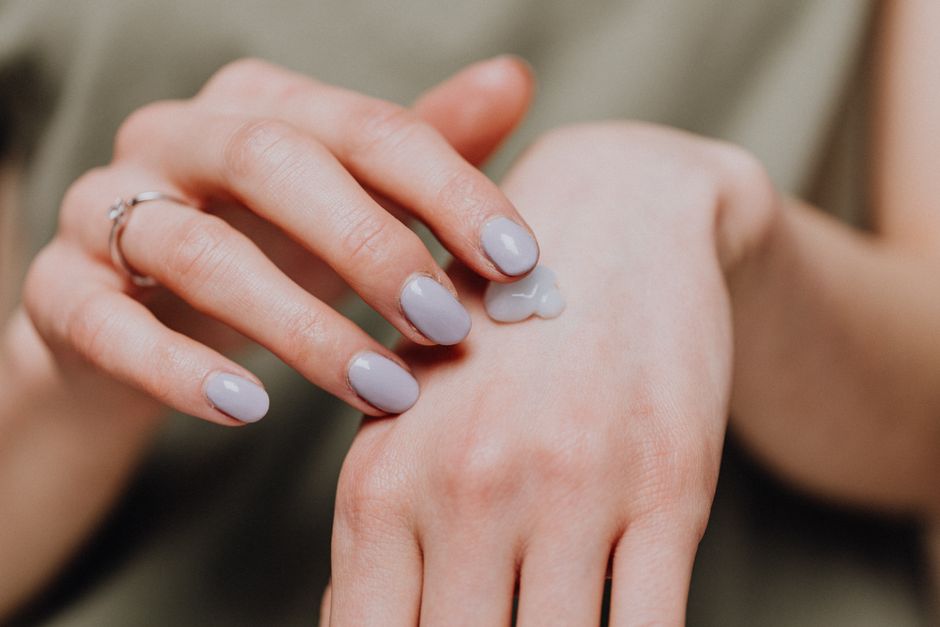
For stronger nails in winter, protect the surrounding skin, reduce repeated wet-dry stress, and file in one direction with a fine-grit file. Cuticle oil helps limit dryness and friction, but it cannot rebuild a damaged nail plate; the best results come from a small routine repeated several times each week.
This is not legal advice — consult a licensed attorney.
Does cuticle oil strengthen nails or just soften them?

What the oil can do
Cuticle oil does not fuse separated layers or change the structure of keratin already formed in the nail. Its useful role is more modest. Oil coats the cuticle and nearby skin, slows moisture loss, and reduces the dry friction that can produce hangnails. Massage also helps spread the product across the sidewalls and under the free edge.
That distinction matters because “strengthening” claims often sound broader than the product can support. If your nail bends and breaks because the surrounding skin is cracked, daily oil may improve comfort and reduce snagging. If the nail is splitting from repeated gel removal or deep peeling, oil alone will not correct the cause. The visible improvement comes as new nail grows from the matrix over time.
How to apply it correctly
Use one small drop per hand, or one brush stroke over each nail and cuticle. Massage for 20 to 30 seconds, then apply hand cream over the top. The cream adds water-binding ingredients and a protective layer; the oil alone may feel smooth but will not replace hand moisturizer.
Apply after handwashing at night and again before going outdoors. For very dry skin, use cotton gloves for 20 to 30 minutes after the evening application. Stop if the product causes burning, swelling, or a rash. Fragrance and essential oils can irritate already cracked skin, so a simple formula is the safer first choice.
How to file weak nails without causing more damage
The correct filing sequence
- Remove rings and wash your hands, then dry them fully. Filing wet nails can encourage bending and uneven edges.
- Trim only if the nail is much longer than your preferred shape. Leave a small margin so the file, rather than the clipper, creates the final edge.
- Choose a fine file around 180 to 240 grit for natural nails. A rough file removes material quickly and can leave microscopic notches.
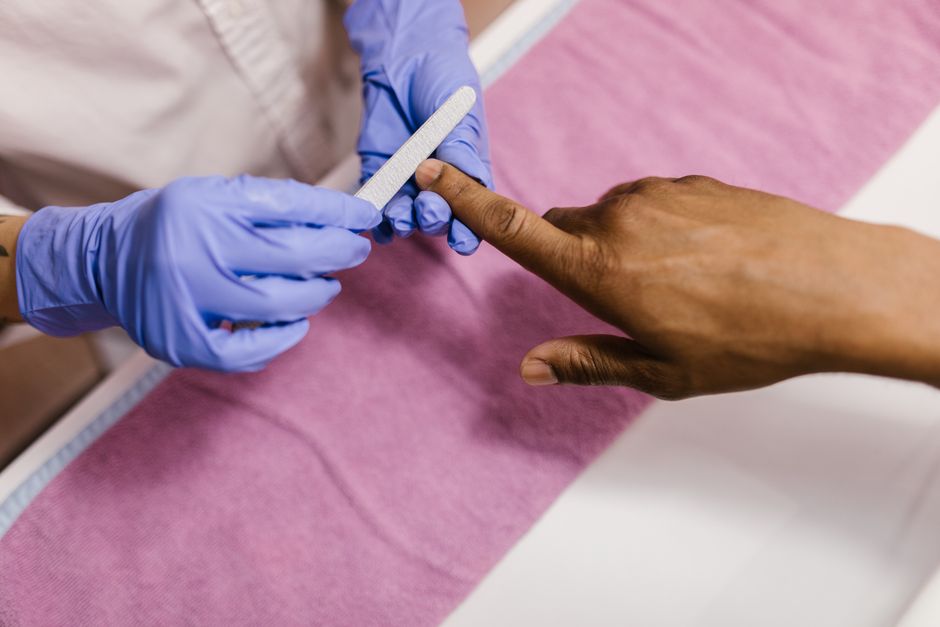
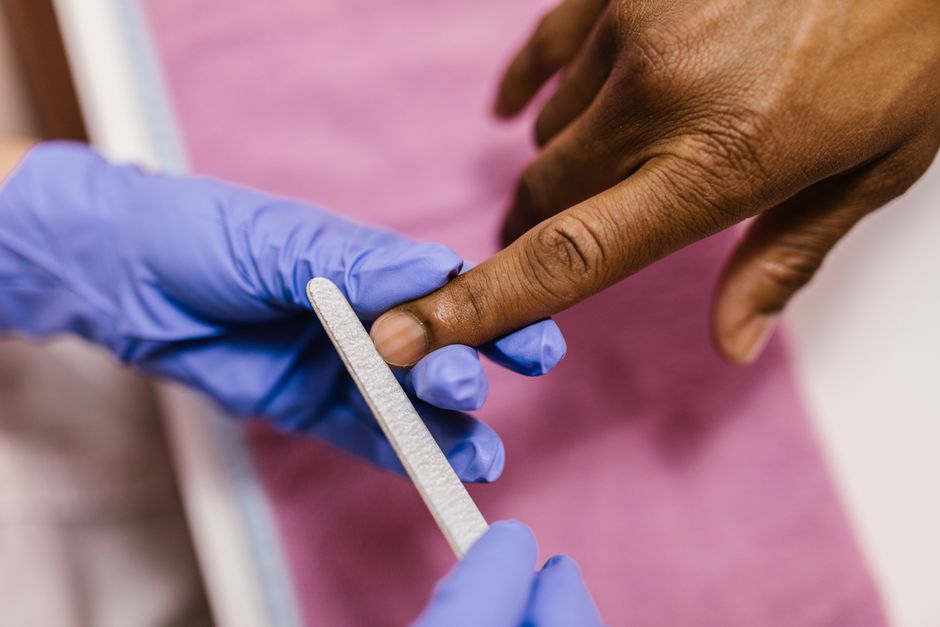
- Place the file under the free edge and move from the outside corner toward the center in one direction. Lift the file and repeat instead of sawing back and forth.
- Use light pressure. Ten gentle passes are safer than three forceful passes.
- Finish by lightly smoothing a snag, then apply cuticle oil and hand cream.
Shape is a strength decision
A rounded or softly squared shape usually protects weak winter nails better than sharp corners. Sharp corners catch on clothing and hair. Very long almond or coffin shapes can also place extra pressure on a thin sidewall. For nails that split at the corners, shorten the edge until the split grows out, then maintain the same length for several weeks.
Do not file deep grooves into the surface and do not use a buffer to erase every ridge. Ridges often reflect normal nail growth, and removing too much plate makes the nail thinner. The winning rule is simple: file the edge to prevent snags, not the surface to chase perfect smoothness.
Cuticle oil versus cream: which winter routine wins?
Oil and cream do different jobs. Oil spreads easily into the cuticle border and sidewalls. Cream adds water and forms a broader protective layer over the hands. For winter splitting, cream should cover the hand, while oil should target the nail perimeter. The following products are useful reference points, not required purchases.
| Product | Format or listed price | Best use | Verdict |
|---|---|---|---|
| Essie Apricot Cuticle Oil | $11 listed price; brush-on oil | Daily cuticle conditioning | Best simple oil for a manicure station |
| Burt’s Bees Lemon Butter Cuticle Cream | $6.49 listed price; 0.30 oz in the repair kit | Dry, rough cuticle edges | Best budget pick for people who dislike runny oil |
| OPI ProSpa Nail & Cuticle Oil | 8.6 mL; CHF 23.90 on the Swiss product page | Brush-on evening care | Best premium-feeling option when texture matters |
| CND SolarOil | Available in small travel sizes and larger bottles | Nail and cuticle conditioning | Best salon-style oil for frequent use |
Prices change by country, retailer, and package size. Essie is the clearest low-cost oil choice when you want a brush applicator and a light texture. Burt’s Bees is the better buy for people with visibly cracked skin who prefer a thicker balm. The official product pages for Essie Apricot Cuticle Oil, Burt’s Bees Lemon Butter Cuticle Cream, and CND SolarOil should be checked for current packaging and availability.
A seven-day winter nail routine that fits real life
- Day one: Shorten nails to a length that does not catch on fabric. File the corners with a 180- to 240-grit file and remove only loose flakes.
- Day two: Apply cuticle oil after your last handwash. Massage the sidewalls and the underside of the free edge for 20 seconds per hand.
- Day three: Add hand cream after every handwash. If you work outdoors, wear lined gloves rather than relying on oil alone.
- Day four: Inspect for snags. File one rough point immediately instead of pulling at it or biting it off.
- Day five: Repeat the evening oil-and-cream routine. Do not cut living cuticle tissue or push it back with force.
- Day six: Take a polish break if removal has left the surface thin, chalky, or peeling. Keep nails short while the damaged edge grows out.
- Day seven: Compare the nail edges, not just the shine. Less snagging, fewer hangnails, and a smoother free edge are better signs than instant hardness.
This schedule works because it changes the repeated causes of winter damage. It does not promise overnight growth. Fingernails grow roughly 3 millimeters per month, so a damaged section must move forward with normal growth before you can remove it completely. A visible improvement in comfort may come within days, while stronger-looking length may take several weeks.
The most common mistake is applying a treatment once and then returning to hot water, bare hands outdoors, and rough filing. Consistency beats a strong-smelling formula used twice.
My clear pick for 2026: buy a simple oil before a hardener
My recommendation is a basic cuticle oil plus a fine file, not a harsh nail hardener, for most winter dryness. A hardener can make a soft nail feel rigid, but rigidity is not the same as strength. If the nail becomes less flexible, it may snap instead of bending. The better first purchase is a product you will actually apply after washing and before bed.
Best choice by problem
For dry skin and hangnails, Burt’s Bees Lemon Butter Cuticle Cream is the most practical pick because its balm texture stays in place. For a lighter brush-on product, Essie Apricot Cuticle Oil is the clearest value at its listed $11 price. For someone who wants a salon-associated oil and does not mind paying more, CND SolarOil is the strongest named option in this group. OPI ProSpa Nail & Cuticle Oil is reasonable when you prefer a richer formula and can buy it at a fair local price.
When not to buy a nail treatment
Do not buy another treatment if the real problem is nail picking, frequent acetone soaking, or filing with a coarse board. Fix the habit first. Skip fragranced oil on broken skin if it stings. Skip a new product when the nail has green, black, or spreading discoloration; cosmetic care is not the right response to a possible infection or injury.
Clear verdict: choose the simplest oil or balm that feels comfortable, pair it with gentle filing, and judge success by fewer breaks over four to six weeks rather than by one shiny application.
When brittle nails need more than home care
Are peeling nails always caused by winter?
No. Winter dryness is common, but persistent peeling can also follow repeated gel removal, chemical exposure, trauma, eczema, psoriasis, or other health issues. If only one nail changes after an injury, protect it and watch the growth. If several nails change at once or the problem continues despite a gentle routine, arrange a clinical assessment.
When should you stop filing and seek help?
Stop home treatment if the skin becomes hot, swollen, increasingly painful, or produces pus. Seek medical advice for a dark streak that does not grow out, a nail that lifts from the bed, sudden widespread changes, or severe pain. Do not cover a suspected infection with polish and do not scrape beneath a lifted nail.
What result should you expect?
Expect softer cuticles first. Next, expect fewer snags as the free edge becomes smoother. New, healthier-looking length takes longer because the damaged nail must grow forward. No oil can guarantee that a nail will never split, and no product replaces protection from water, chemicals, friction, and cold.
The single most important takeaway is this: winter nail strength improves fastest when you use cuticle oil and hand cream consistently, file gently in one direction, and remove the habits that keep damaging the nail edge.