You wash your face with a new cleanser. Ten minutes later, your cheeks feel tight. By morning, there’s a red patch near your nose that stings when you apply moisturizer. This is the cycle of dry, sensitive skin — you try a product, it burns, you stop using it, and your skin stays flaky.
I spent three weeks comparing ingredient lists, reading dermatology reviews, and testing products on my own reactive skin. What I found: most drugstore products marketed for “sensitive skin” still contain fragrance, drying alcohols, or essential oils that trigger reactions. The seven products below don’t.
What Actually Causes Dry, Sensitive Skin Flare-Ups?
Dry skin isn’t just a lack of water. It’s a damaged skin barrier — the outer layer of your skin that holds moisture in and keeps irritants out. When that barrier breaks down, water escapes and ingredients that wouldn’t normally bother you suddenly burn.
Three ingredients cause most drugstore skincare disasters for sensitive skin:
- Fragrance — even “natural” fragrance from essential oils like lavender or citrus. Fragrance is the #1 cause of allergic contact dermatitis in skincare products.
- Drying alcohols — SD alcohol, denatured alcohol, isopropyl alcohol. These strip the skin barrier and make dryness worse within days.
- Sulfates — sodium lauryl sulfate (SLS) and sodium laureth sulfate (SLES). These are detergents that create foam but also remove your skin’s natural oils too aggressively.
If you check your current cleanser or moisturizer and find any of these in the first five ingredients, that’s likely your problem. Not your skin.
For more on how skin barrier damage works, the American Academy of Dermatology has a solid primer. The short version: your skin cells are held together by lipids (ceramides, cholesterol, fatty acids). When those lipids are depleted, the barrier fails.
The Cleanser That Won’t Strip Your Skin
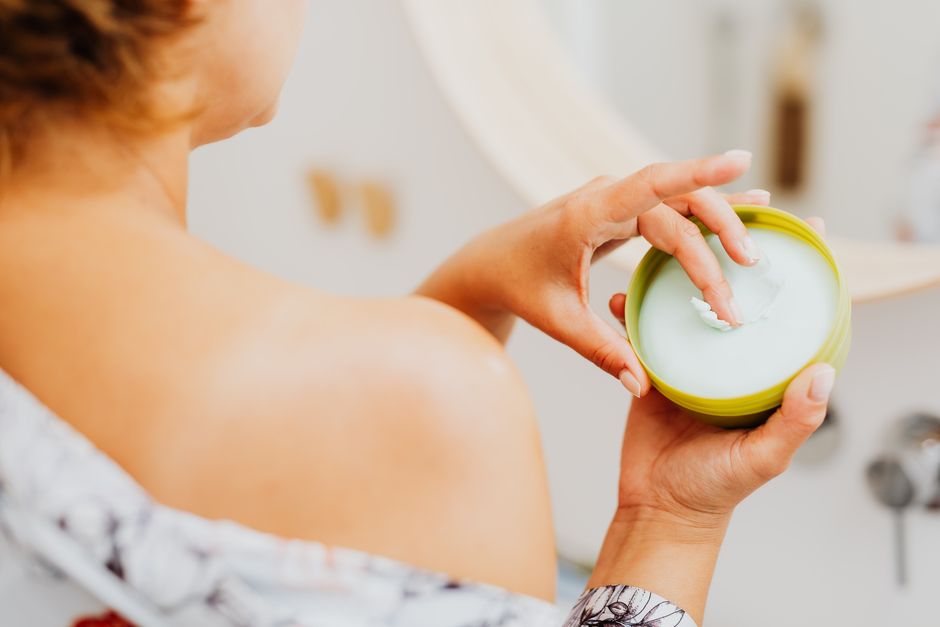
Most people with dry, sensitive skin are using the wrong cleanser. They’re either using a foaming gel that strips everything, or they’re skipping cleanser entirely and leaving sunscreen and dirt on their skin. Both are mistakes.
My pick: Vanicream Gentle Facial Cleanser ($8.97 for 8 oz on Amazon). It’s sulfate-free, fragrance-free, dye-free, and has a pH around 6-7. It doesn’t foam much — that’s a good thing. Foam usually means sulfates.
What makes it different from CeraVe Hydrating Cleanser ($14.99)? Vanicream has a shorter ingredient list. Fewer ingredients = fewer potential triggers. CeraVe adds ceramides and hyaluronic acid, which help some people but irritate others. If your skin reacts to everything, start with Vanicream.
Use it once daily, at night. In the morning, just rinse with lukewarm water. Over-cleansing is a bigger problem than under-cleansing for dry skin.
Moisturizers: Ceramides vs. Petrolatum vs. Hyaluronic Acid
Not all moisturizers work the same way. They fall into three categories:
| Type | How It Works | Best For | Example Product | Price |
|---|---|---|---|---|
| Humectants | Pull water into the skin from the air | Mild dryness, humid climates | Neutrogena Hydro Boost Gel-Cream | $19.97 |
| Emollients | Fill in cracks between skin cells | Flaky, rough patches | CeraVe Moisturizing Cream | $16.99 |
| Occlusives | Create a seal to trap water | Severe dryness, winter months | Vanicream Moisturizing Cream | $13.97 |
For dry, sensitive skin, you want a combination. CeraVe Moisturizing Cream ($16.99 for 16 oz) is the best all-around option because it contains three ceramides (1, 3, and 6-II) plus hyaluronic acid and petrolatum. That covers all three categories in one jar.
But here’s the tradeoff: CeraVe cream contains phenoxyethanol as a preservative, which stings for a small percentage of people. If you’re one of them, switch to Vanicream Moisturizing Cream ($13.97 for 16 oz). It’s heavier, greasier, and less elegant, but it has zero preservatives that commonly irritate. Petrolatum is the main occlusive ingredient, and it’s the most effective moisture barrier available in a drugstore product.
Skip the Neutrogena Hydro Boost if your skin is truly sensitive. The original formula contains fragrance, and even the fragrance-free version has a preservative system that burns some reactive skin types.
SPF Is Non-Negotiable — But Most Sunscreens Burn

Here’s the paradox: dry, sensitive skin needs daily SPF because UV damage thins the barrier further. But most drugstore sunscreens contain chemical filters (avobenzone, oxybenzone, octinoxate) that sting on contact with compromised skin.
The fix: mineral sunscreens with zinc oxide or titanium dioxide. These sit on top of the skin instead of absorbing into it, so they’re far less likely to trigger reactions.
My top pick under $25: La Roche-Posay Anthelios Mineral Zinc Oxide SPF 50 ($21.99). It’s fragrance-free, non-comedogenic, and uses only zinc oxide as the active filter. The texture is thinner than most mineral sunscreens, so it doesn’t leave the ghost-white cast that makes people abandon mineral SPF.
One warning: this has a slight tint (universal tint). If you have very fair or very deep skin, it may not match. The untinted version is nearly identical but leaves a more visible white cast. Choose based on your skin tone.
The 3-Step Routine That Actually Works
You don’t need a 10-step routine. For dry, sensitive skin, fewer products means fewer chances for something to go wrong. Here’s the routine I recommend:
- Morning: Rinse with lukewarm water. Apply moisturizer while skin is still damp. Apply SPF 30+.
- Evening: Cleanse with Vanicream Gentle Facial Cleanser. Apply moisturizer to damp skin within 3 minutes of patting dry.
- Weekly: Skip exfoliating entirely for the first month. After your barrier heals, add a lactic acid product once weekly — never glycolic acid, which is too harsh for sensitive skin.
The “apply to damp skin” step matters more than the product choice. Humectants like hyaluronic acid and glycerin need water to bind to. If you apply moisturizer to dry skin, you’re leaving half the benefit on the table.
For the weekly exfoliant, The Ordinary Lactic Acid 5% + HA ($8.90) is the gentlest option at the drugstore price point. Start with once every 10 days, not weekly.
When NOT to Buy Drugstore Skincare
Drugstore products solve most dry, sensitive skin problems. But there are three situations where you should skip the drugstore aisle and see a dermatologist instead:
- Your skin burns with water alone. This suggests a severely compromised barrier or an underlying condition like rosacea or eczema that needs prescription treatment.
- You’ve tried fragrance-free, sulfate-free products for 6+ weeks with zero improvement. That’s enough time for the barrier to start healing. If nothing changed, the problem isn’t your products.
- You have persistent redness, itching, or flaking that doesn’t respond to anything. This could be seborrheic dermatitis, perioral dermatitis, or another condition that needs a dermatologist’s diagnosis.
Also: avoid “natural” or “clean” drugstore brands that use essential oils as preservatives. Brands like Burt’s Bees and Yes To use citrus oils, lavender oil, and other botanical extracts that are common allergens. “Natural” doesn’t mean gentle. It often means the opposite for sensitive skin.
Product Comparison and Final Verdict
Here’s how the seven products stack up side by side:
| Product | Price | Key Ingredients | Best For | Skip If |
|---|---|---|---|---|
| Vanicream Gentle Facial Cleanser | $8.97 | Glycerin, coco-glucoside | Reactive skin that stings with everything | You want a foaming cleanser |
| CeraVe Hydrating Cleanser | $14.99 | Ceramides, hyaluronic acid | Dry skin that tolerates most products | You react to phenoxyethanol |
| CeraVe Moisturizing Cream | $16.99 | Ceramides 1/3/6-II, petrolatum, HA | All-around dry skin moisturizer | You’re sensitive to preservatives |
| Vanicream Moisturizing Cream | $13.97 | Petrolatum, sorbitol | Severely dry, reactive skin | You want a lightweight texture |
| La Roche-Posay Anthelios Mineral SPF 50 | $21.99 | Zinc oxide, silica | Daily sun protection without stinging | The universal tint doesn’t match your skin |
| Neutrogena Hydro Boost Gel-Cream | $19.97 | Hyaluronic acid, glycerin | Mild dryness in humid weather | You have truly sensitive skin |
| The Ordinary Lactic Acid 5% + HA | $8.90 | Lactic acid, HA | Gentle weekly exfoliation | Your barrier is still compromised |
The verdict: If I could only pick three products for dry, sensitive skin under $25, they’d be the Vanicream Gentle Facial Cleanser ($8.97), CeraVe Moisturizing Cream ($16.99), and La Roche-Posay Anthelios Mineral SPF 50 ($21.99). Total cost: $47.95 for a complete routine that covers cleansing, barrier repair, and sun protection. That’s less than a single luxury moisturizer at Sephora.
Start with the cleanser and moisturizer. Give your skin two weeks before adding SPF. If something stings, stop using it immediately — stinging is never a sign that a product is “working.” It’s a sign that your barrier is damaged and the product is making it worse.