Buy the microcurrent device first. Everything else is optional.
That’s the short version. The longer version explains why most people waste money doing it backwards—buying four $30 tools that deliver nothing visible, then eventually landing on the one $300 device that actually moves the needle. This guide cuts that process down to the decisions that matter.
Why Microcurrent Deserves the First Spot in Your Tool Kit
Microcurrent devices send low-level electrical impulses—measured in microamperes, far below what you’d feel as a shock—through your facial muscles. The mechanism isn’t speculative. Physical therapists have used microcurrent for muscle rehabilitation since the 1980s. What changed is that brands figured out how to package it for home use.
The NuFACE Trinity ($339) is the benchmark. It’s FDA-cleared, which matters. Apply the included gel conductor, glide the two metal spheres upward along your face using the pattern shown in the guide, and repeat daily for 5–10 minutes. Most people see measurable lifting around the jawline and brow area within three weeks of consistent use. Not dramatic. Real.
The Foreo Bear ($299) is the closest competitor. It pairs microcurrent with T-Sonic pulsations and connects to an app that walks you through each facial zone. In practice, results between the Bear and the NuFACE Trinity are comparable—same category of lift, slightly different experience. NuFACE for simplicity. Bear if you want guided sessions.
At the premium end: the Ziip Nano Current ($495) uses both microcurrent and nanocurrent, which theoretically reaches deeper tissue. Whether that translates to noticeably better results than the NuFACE is genuinely debated. For most people, the NuFACE delivers the same category of result at a lower price.
What microcurrent won’t do: fix pigmentation, resurface texture, or erase deep lines. It firms and lifts. That’s the whole job. Knowing that upfront saves a lot of disappointment.
How Often Should You Use a Microcurrent Device?
Daily for the first 60 days, then 2–3 times per week to maintain results. Skipping weeks and doing marathon catch-up sessions doesn’t compensate. Microcurrent is cumulative—the muscle memory builds from repeated short sessions, not occasional long ones.
Can You Use Microcurrent Over Active Breakouts?
No. Skip inflamed skin, cystic acne, and anything open or irritated. Microcurrent stimulates the area and can spread bacteria. Work around breakouts, not over them.
What Every Face Tool Actually Does: Side-by-Side
Face tool marketing uses nearly identical language across every category. Here’s what each one actually delivers, stripped of the copy:
| Tool Type | Mechanism | Realistic Result | Price Range | Skip If… |
|---|---|---|---|---|
| Microcurrent Device | Low-level current re-educates facial muscles | Visible lift and firmness with daily use | $150–$495 | You have a pacemaker or metal implants in face |
| LED Light Mask | Specific wavelengths target skin cells (photobiomodulation) | Acne reduction (blue), collagen support (red) | $50–$455 | You want lifting alone—red light doesn’t firm muscles |
| Gua Sha Stone | Manual lymphatic drainage via angled scraping | Temporary depuffing, better product absorption | $15–$80 | You want lasting structural changes from a $28 tool |
| Facial Roller | Light massage, mild cooling | Brief puffiness reduction, relaxing ritual | $10–$60 | You expect skincare results—this is a massage tool |
| Sonic Cleansing Device | Vibration loosens debris and buildup in pores | Cleaner skin, improved absorption of products applied after | $40–$200 | You have rosacea or thin, sensitized skin |
| Microneedling Roller | Micro-punctures trigger collagen production | Texture improvement, reduced scarring over 8–12 weeks | $20–$200 | You have active acne, eczema, or broken skin anywhere on face |
The pattern here is clear: tools in the $15–$60 range deliver temporary or supportive benefits. Tools that produce lasting structural change—microcurrent, LED at clinical output levels, and properly used microneedling—cost more and require more consistency. There is no shortcut in this category.
Five Mistakes That Drain Your Budget Without Results
- Treating budget LED masks as equivalent to clinical-grade ones. A $50 generic mask and the Dr. Dennis Gross DRx SpectraLite FaceWare Pro ($455) or CurrentBody Skin LED Light Therapy Mask ($380) are not the same device. Budget masks run at lower joule output with fewer LED wavelengths. You’ll get some benefit—just a fraction of what the peer-reviewed studies measured. Know what you’re buying.
- Using tools on skin that isn’t clean. Any device that moves across your face—roller, gua sha, microcurrent spheres—drags whatever’s on your skin with it. Sunscreen, makeup residue, the day’s pollutants. Wash first, every time.
- Pressing too hard with gua sha. Traditional gua sha targets the back and shoulders, which have thick muscle. Facial skin is thinner. Heavy scraping causes broken capillaries. The Mount Lai Rose Quartz Gua Sha ($28) includes clear technique guidance—firm pressure that clears within 15 minutes is correct. Redness that lingers for hours is not.
- Expecting tools to replace active skincare ingredients. Microcurrent does not replace retinol. LED light doesn’t replace vitamin C serum. Tools and actives work together. A $300 device used alongside a stripped-back routine will underperform a $300 device paired with appropriate products.
- Skipping the conductive gel on microcurrent devices. The NuFACE gel isn’t optional packaging filler. Without a conductive medium, the device can’t transmit current properly and may cause irritation on dry skin. Aloe vera gel works in a pinch. The proprietary formula works better.
Gua Sha vs. Facial Roller: Settled
Gua sha wins. The angled stone allows more targeted pressure along the jaw and brow bone, and the flat face makes lymphatic drainage more effective per stroke. Rollers are pleasant, but gua sha delivers more in the same amount of time.
Keep the roller if you love the ritual. But between the Herbivore Botanicals Jade Facial Roller ($34) and the Mount Lai gua sha at $28—it’s not a close comparison.
How to Use Face Tools Without Wrecking Your Skin
What Order Do Face Tools Go in Your Routine?
Sonic cleansing device goes first—before any products, on bare skin. Microcurrent comes next, after your conductive gel, before serum. LED masks go on after serums are applied; most clinical masks are designed to work through product layers, and light exposure can boost absorption. Gua sha and rollers go last, after moisturizer, using the slip of the cream to reduce friction on skin.
Which Skin Types Should Skip Specific Tools?
Rosacea-prone skin: avoid sonic cleansing devices and aggressive gua sha. Both increase surface circulation—exactly what rosacea doesn’t need. The PMD Clean ($79) has a sensitive mode, but if your skin flares unpredictably, the risk isn’t worth the benefit.
Active acne: skip rolling and gua sha over affected areas entirely. LED blue light at 415nm is one of the few face tools that actually helps during breakouts by targeting acne-causing bacteria at the surface. It’s the exception—almost everything else should stay away from inflamed skin.
How Long Before You See Results From Any Tool?
Microcurrent: 2–3 weeks of daily use. LED light therapy: 4–6 weeks at 3–5 sessions per week. Gua sha depuffing: same morning. Microneedling texture improvement: 8–12 weeks minimum. Anyone selling faster timelines is overselling.
Face Tools by Budget: Where to Start, When to Upgrade
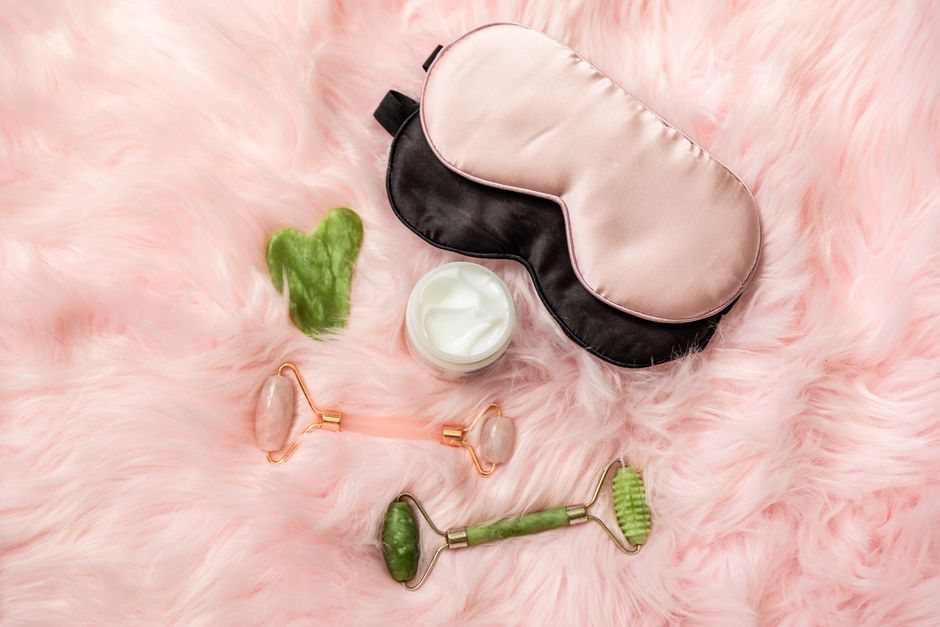
Under $50: The Mount Lai Rose Quartz Gua Sha at $28 is the best value per dollar in this entire category. It teaches lymphatic drainage technique, delivers real (if temporary) depuffing, and lasts indefinitely if you don’t drop it on tile. Starting here is a reasonable move before committing to anything more expensive.
$50–$150: The PMD Clean at $79 is the right choice. Silicone cleansing with micromassage, gentler than brush-based alternatives, appropriate for most skin types, and it genuinely improves how well your serums absorb after use.
$150–$400: This is where real decisions happen. The NuFACE Trinity ($339) or Foreo Bear ($299) for lifting and firmness, or the CurrentBody Skin LED Mask ($380) for texture and glow. Don’t split the budget across two mid-tier tools. Pick the category that matches your main concern and commit to it.
Over $400: The Dr. Dennis Gross DRx SpectraLite at $455 is the strongest LED option for home use. It combines red and blue wavelengths—anti-aging and acne in one session—at output levels closer to professional equipment than most home devices reach. Worth the price if LED therapy is your long-term play.
The device you’ll actually use consistently beats the one gathering dust in a drawer at twice the price.