A 2019 study in the Journal of Cosmetic Science measured hair tensile strength after repeated flat iron exposure at 230°C — and found a 45% reduction in just eight weeks of regular use. That is not a before-and-after photo. That is a mechanical failure rate measured in a lab. Yet most people buy whichever straightener has the most five-star reviews and reach for the highest temperature setting because it works faster.
The gap between a poorly engineered flat iron and a well-designed one is real, measurable, and matters a great deal if you use a straightener more than once a week. These six tools have specific, verifiable features that reduce damage risk — not just better packaging.
This is not professional styling advice. Hair damage risk varies based on your hair type, condition, and technique. The information here is for educational and comparative purposes only.
What Actually Causes Heat Damage — and Why Plate Material Is Half the Battle
The simple version: high temperatures break down keratin. That is true, but it is only part of the story. Hair damage from flat irons comes from two distinct mechanisms working simultaneously, and most people only think about one of them.
The first is thermal degradation. Keratin, the protein that makes up roughly 90% of the hair shaft, begins to break down at temperatures above approximately 200°C (392°F). Regular exposure above this threshold weakens the internal structure, which is why hair becomes brittle, loses elasticity, and eventually snaps off at the ends.
The second mechanism is mechanical friction. Cheap or worn plates with uneven surfaces create microscopic tears in the hair cuticle — the outer protective layer — as they slide through the strand. A straightener set to a safe-sounding 175°C can still cause significant damage because the plates are rough or inconsistent. Plate quality matters as much as temperature settings. Sometimes more.
Ceramic vs. Titanium vs. Tourmaline: What the Labels Actually Mean
Ceramic plates distribute heat evenly across the entire surface and maintain consistent temperature throughout. That consistency matters more than raw heat output. Uneven hot spots — where one area of the plate hits 220°C while another hits 195°C — are where localized damage concentrates and where split ends originate.
Titanium heats faster and reaches higher temperatures, making it efficient for thick or coarse hair but genuinely risky for fine, color-treated, or already-damaged strands. A titanium flat iron at 450°F can cause visible damage in one pass on fine hair. It is not a bad material — it is the wrong material for the wrong hair type, in the wrong hands.
Tourmaline is a mineral coating applied over a ceramic base. When heated, it releases negative ions that neutralize static, close the cuticle, and help moisture stay sealed in. The practical benefit: smoother results at lower temperatures. Lower temperatures and fewer passes means less cumulative heat exposure over every session, every week, every month.
The Spec That Separates a $250 Straightener from a $30 One
Temperature variance is the number most buyers never look for — and most budget brands never publish. It refers to how far a flat iron’s actual temperature drifts from its set temperature during use.
Budget straighteners typically carry variance of 15–20°C. That means a tool set to 180°C can spike to 200°C repeatedly throughout a styling session, without warning, on every single pass. High-end tools use sensor technology to monitor and correct temperature continuously. The GHD Platinum+ uses predictive technology that adjusts 250 times per second to keep variance under 3°C. That difference, compounded across every session over months of use, is not trivial.
If a brand does not publish temperature variance data, assume it is high. Absence of data is usually an answer.
Does Ionic Technology Actually Do Anything?
Yes, but less than the marketing implies. A 2026 paper in the Journal of Investigative Dermatology Supplements confirmed that negative ion emission from styling tools measurably reduces surface static and improves cuticle closure. The effect is most noticeable on fine to medium hair.
The real damage-reduction pathway is indirect: smoother, less frizzy results mean fewer passes to chase the same finish. Fewer passes means lower cumulative heat exposure. That is the actual benefit — not some vague claim about “healthier hair energy.” Do not pay a premium for the ionic claim alone. Look at it as a secondary feature when two otherwise equal tools are being compared.
6 Straighteners Compared: Specs, Price, and What Each One Actually Gets Right
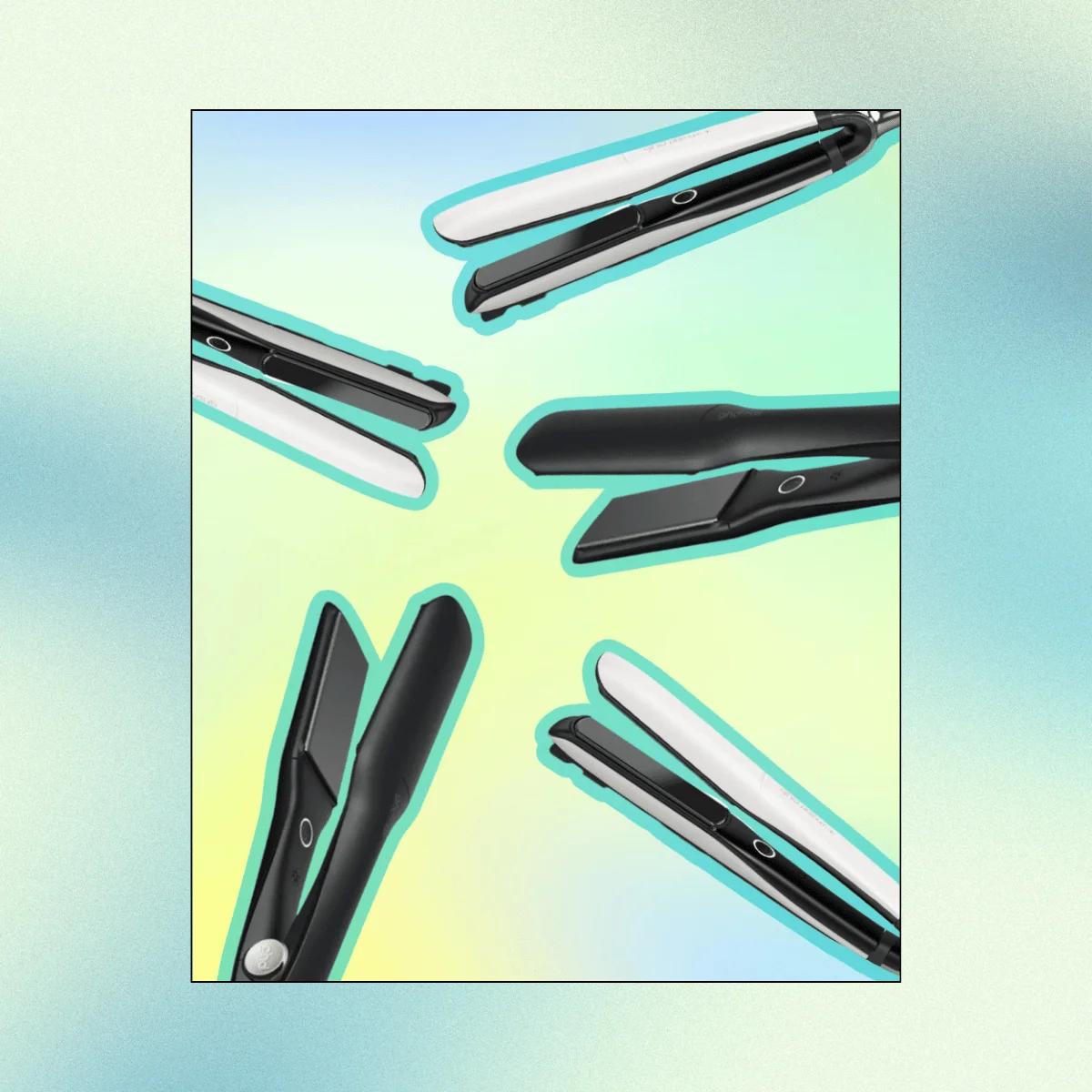
Each tool below has at least one verifiable feature — not a marketing claim — that justifies its inclusion here.
| Straightener | Plate Type | Temperature Range | Key Damage-Reduction Feature | Approx. Price |
|---|---|---|---|---|
| GHD Platinum+ | Ceramic | Fixed 185°C (365°F) | Predictive tech, <3°C variance | $249 |
| Dyson Corrale | Flexing manganese copper alloy | Up to 210°C (410°F) | Flexing plates reduce mechanical stress | $499 |
| T3 Lucea ID | Tourmaline ceramic | 140–232°C (285–450°F) | 9 digital heat settings, SinglePass tech | $200 |
| BaBylissPRO Nano Titanium | Nano titanium | Up to 235°C (455°F) | Far-infrared heat, 50 heat settings | $90 |
| CHI Air Expert | Tourmaline ceramic | Up to 210°C (410°F) | Ionic conditioning, smooth plate finish | $80 |
| Remington Keratin Therapy Pro | Keratin-infused ceramic | 150–230°C (300–446°F) | Keratin microfibers condition during styling | $45 |
GHD Platinum+ ($249): The Precision Pick
The fixed 185°C setting is not a limitation — it is a deliberate engineering decision. GHD identified 185°C as the temperature that achieves reliable straightening results without crossing the threshold for significant keratin degradation. The predictive sensor system samples temperature 250 times per second and corrects before any spike can occur. For fine, color-treated, or already-compromised hair, this is the most damage-controlled tool available at this price.
Dyson Corrale ($499): A Mechanically Different Approach
The flexing manganese copper alloy plates are the actual differentiator — not the brand name. Standard rigid flat iron plates create uneven mechanical stress as hair passes through: compressed in some areas, under tension in others. Dyson’s plates flex to conform more uniformly around the hair strand, reducing that friction. Per Dyson’s own testing, this allows effective styling at lower temperatures. At $499 it is expensive. The mechanical concept, however, is genuinely distinct from every other tool in this comparison.
T3 Lucea ID ($200): For the Informed User
Nine digital heat settings from 140°C to 232°C mean nothing if you do not know what setting your hair actually needs. If you do know, this is the right tool. The tourmaline ceramic plates are solid construction, not a thin coating over a cheap base. SinglePass technology is designed to straighten in a single pass rather than multiple — which directly reduces cumulative heat exposure. Best suited for people who have already identified their hair’s optimal temperature and want precise, repeatable control over it.
BaBylissPRO Nano Titanium ($90): Handle With Care
Fifty heat settings from 280°F to 455°F means the option to use this tool correctly exists — at 160–180°C for fine hair, 200–220°C for medium hair, up to 230°C for thick or coarse. Most users do not use it correctly. They default to high because high works fastest. At the right setting, far-infrared heat works through the hair shaft from the inside rather than cooking the outer surface, which genuinely reduces surface damage. This tool belongs in experienced hands. Treat it as a professional-grade instrument, not a drugstore upgrade.
CHI Air Expert ($80): Competent and Unpretentious
No proprietary technology. Tourmaline ceramic plates, ionic conditioning, a consistently smooth plate surface. It does exactly what it says at a price that does not require much justification. For most people with medium-texture, reasonably healthy hair who straighten a few times per week, this is enough tool. The GHD Platinum+ is objectively better. The CHI Air Expert is good enough — and that is a legitimate purchasing decision.
Remington Keratin Therapy Pro ($45): The Budget Defender
The keratin-infused ceramic plates are a small but real benefit. They deposit a trace conditioning agent during each pass, providing minor cuticle protection at a $45 entry point. Not a substitute for an actual keratin smoothing treatment. Not as precise as the GHD. But for occasional use on healthy, medium-texture hair, this is a defensible choice — and the five-year warranty suggests Remington has confidence in the build quality that most budget-tier brands simply do not express.
Bottom Line: The GHD Platinum+ is the correct choice for most people, especially those with fine, color-treated, or fragile hair. The Dyson Corrale is worth the $499 price if mechanical friction is the primary concern. The BaBylissPRO Nano Titanium is a capable tool that most users will operate at the wrong temperature — buy it with knowledge, not optimism.
The Four Mistakes That Cause More Damage Than the Tool Itself
Blame tends to land on the straightener. Usually it belongs to the person holding it.
- Wrong temperature for your hair type. Fine or chemically processed hair should stay at or below 180°C (355°F). Medium hair: 180–200°C. Thick or coarse hair: 200–230°C. Using 230°C on fine hair because it finishes faster is a trade — thirty seconds saved now for weeks of breakage afterward.
- Multiple passes on the same section. Each additional pass adds cumulative thermal stress to the same stretch of hair. If a section is not straightening in one or two passes, going over it three or four more times will not improve results — only accelerate damage. The problem is almost always technique (sections too thick, moving too fast) or the wrong temperature setting, not insufficient heat.
- No heat protectant. A silicone-based heat protectant creates a physical barrier that lowers the effective contact temperature at the hair surface. Products like Tresemmé Thermal Creations Heat Tamer Spray and Kenra Platinum Silkening Mist do this for under $15. This step is not optional if the hair’s condition is a priority.
- Straightening damp hair. The most damaging mistake on this list, full stop. Water trapped inside the hair shaft superheats instantly when a hot plate passes over it, creating steam pressure that ruptures the cuticle from the inside out. “Mostly dry” is not dry. Hair must be completely dry — not 90%, not almost — before any flat iron makes contact with it.
For Fine or Damaged Hair, the Answer Is Not Complicated
The GHD Platinum+ at $249. Fixed temperature eliminates user error. Predictive technology handles variance. Ceramic plates minimize friction. If budget is the hard constraint, the CHI Air Expert at $80 is the next best option — less precise, but significantly safer than any generic titanium tool with a dial that will inevitably get pushed too high.
How to Read “Damage-Free” Claims Without Getting Burned
Every flat iron sold right now uses some version of “damage-free,” “hair-safe,” or “protective technology.” Most of it is meaningless without the specifications underneath. Here is the actual filter to apply before purchasing anything in this category.
Does the Brand Publish Temperature Variance Data?
Maximum temperature tells you the ceiling. Temperature variance tells you whether the tool holds the temperature you actually set during a real styling session. A flat iron set to 180°C that spikes to 198°C repeatedly is more dangerous than one that holds 185°C within a 3°C range — even though the first one’s dial shows a lower number. If a brand does not publish variance data, the variance is probably high enough that they prefer you not know it.
Is “Ceramic” a Solid Plate or a Thin Coating?
Both are sold under the same label. A solid ceramic plate maintains consistent heat distribution for years of regular use. A thin ceramic coating over a cheap metal base wears off in 12–18 months, exposing the rougher metal surface underneath. Signs of a compromised coating: hair starts catching or snagging slightly, static increases noticeably, the plate surface looks or feels uneven under direct light. Once the coating is gone, the ceramic claim on the original box is a historical fact, not a current one. Inspect plates visually every six months.
What Does the Warranty Tell You About Build Confidence?
GHD covers the Platinum+ for two years. Dyson covers the Corrale for two years. Remington covers the Keratin Therapy Pro — a $45 tool — for five years. That five-year warranty on a budget-tier product is a meaningful signal about how the brand views its own construction quality. T3 offers one year. A six-month warranty on a $150 flat iron should prompt a real question about what the manufacturer expects to fail and when.
The 2019 tensile strength study that opened this piece found something worth returning to: the biggest predictor of hair damage across all subjects was not which tool they used. It was the temperature settings they chose. The right straightener removes a significant portion of the risk — but the right tool used at the wrong temperature still costs you. Start with equipment designed to work with you. Use it at the temperature your hair actually needs.