
You wake up, wash your face, and by 11 a.m. your forehead looks like you rubbed it with butter. You’ve tried the 10-step routines. You’ve tried the clay masks, the toners, the serums, the spot treatments. Your skin still breaks out. And now your bathroom counter looks like a Sephora clearance shelf.
Here’s what nobody tells you: oily skin gets worse when you over-treat it. Strip the oil too aggressively and your skin panics, producing even more sebum to compensate. Add too many actives and you wreck your moisture barrier, which lets acne bacteria thrive. The fix isn’t more products. It’s fewer, smarter ones.
I spent two weeks researching dermatologist recommendations, ingredient lists, and real user reviews to build a routine that works for oily, acne-prone skin without requiring a chemistry degree. This is the 2026 version — updated for current formulations and prices.
The Core Problem: Why Most Oily Skin Routines Fail
Before we get to products, you need to understand what you’re actually fighting. Oily skin isn’t just about excess sebum. It’s about three connected problems:
- Overactive sebaceous glands — your skin produces more oil than it needs, often due to hormones or genetics.
- Slow cell turnover — dead skin cells don’t shed fast enough, so they mix with oil and clog pores.
- Compromised barrier function — when you strip the skin with harsh cleansers, you damage the protective outer layer, which triggers inflammation and more oil production.
Most routines fail because they only attack problem one. They use aggressive cleansers and astringent toners that temporarily remove oil but worsen problems two and three. Your skin fights back. You break out more. You buy more products. The cycle continues.
The minimalist approach works because it addresses all three problems simultaneously with the fewest possible steps. You need exactly three products: a cleanser that removes oil without stripping, a treatment that unclogs pores and reduces inflammation, and a moisturizer that keeps the barrier intact. That’s it.
Step 1: The Cleanser That Won’t Trigger Rebound Oil

Your cleanser sets the tone for everything. Pick the wrong one and no amount of serum or moisturizer will save you. For oily skin, you want a foaming cleanser with a pH between 5.0 and 6.0 — anything more alkaline will disrupt your acid mantle and cause that tight, squeaky feeling that actually signals barrier damage.
Morning: CeraVe Foaming Facial Cleanser
This is the default choice for a reason. It contains niacinamide and ceramides, which help repair the barrier while the foaming action removes overnight oil. It’s around $15 for 16 ounces, which lasts 4-6 months. No fragrance, no sulfates, no drama. If you wake up with a shiny T-zone, this handles it without leaving your face feeling like cardboard.
Evening: PanOxyl Acne Foaming Wash (4% Benzoyl Peroxide)
If you’re actively breaking out, switch to this at night. Benzoyl peroxide kills acne-causing bacteria and helps unclog pores. The 4% concentration is strong enough to work but less irritating than the 10% version. It costs about $12. One warning: benzoyl peroxide bleaches towels and pillowcases, so use white ones or rinse thoroughly.
Don’t use both cleansers in the same session. Morning = CeraVe. Evening = PanOxyl. If your skin gets dry or flaky, use PanOxyl every other night instead.
Step 2: The One Treatment That Replaces Five Serums
Here’s where most people lose the plot. They buy a salicylic acid serum, a niacinamide serum, a hyaluronic acid serum, and a vitamin C serum, then layer them in some complicated order. Stop. You need one well-formulated product that does the heavy lifting.
For oily, acne-prone skin, that product is La Roche-Posay Effaclar Duo ($24 for 40ml). It contains 5.5% micronized benzoyl peroxide paired with lipo-hydroxy acid (LHA), which is a gentler exfoliant than salicylic acid. It treats existing breakouts, prevents new ones, and helps fade post-acne marks. Apply a thin layer all over your face after cleansing, not just on active pimples.
If benzoyl peroxide irritates your skin (it happens, especially if you’re also using the PanOxyl wash), swap to Naturium Niacinamide Serum 12% Plus Zinc 2% ($16 for 30ml). Niacinamide regulates oil production and reduces inflammation without the dryness that BP can cause. Zinc has mild antibacterial properties. This is the better option if your skin leans sensitive or you’re dealing with redness alongside breakouts.
Pick one. Don’t use both. The goal is minimalism, not a chemistry experiment on your face.
Step 3: Moisturizer Is Not Optional — Even for Oily Skin
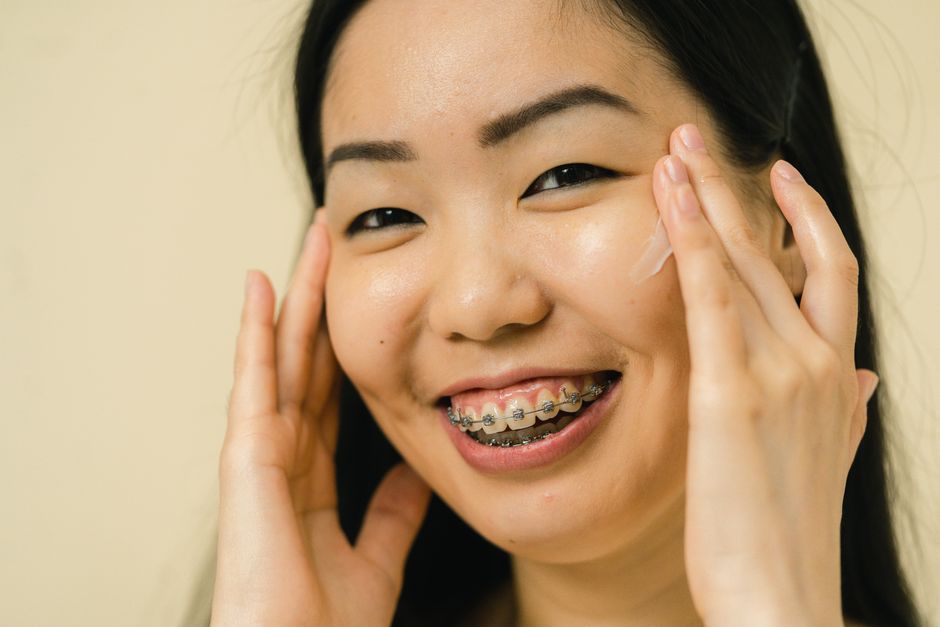
Yes, you need moisturizer. Every single day. Oily skin still needs hydration, and skipping moisturizer is one of the fastest ways to trigger rebound oil production. The key is choosing a gel-based formula that hydrates without adding oil or clogging pores.
Neutrogena Hydro Boost Water Gel ($19 for 50ml) is the standard recommendation. It uses hyaluronic acid to pull water into the skin without any heavy oils or butters. It absorbs in under a minute and leaves zero residue. If you’re on a tight budget, the CeraVe PM Facial Moisturizing Lotion ($13 for 3 ounces) is lighter and contains niacinamide, though it’s technically a lotion rather than a gel.
Apply moisturizer while your skin is still slightly damp from cleansing. This locks in the water and makes the hyaluronic acid work better. Use about a nickel-sized amount. More than that is waste.
What to Skip: Products That Sabotage Oily Skin
This section is short because the message is simple: stop using these things.
- Physical scrubs — walnut shells, apricot kernels, microbeads. They cause micro-tears in the skin that let bacteria enter and trigger more breakouts. Chemical exfoliants do the same job without the damage.
- Alcohol-based toners — anything with denatured alcohol in the first five ingredients. They strip oil temporarily but destroy your barrier. The tight feeling afterward is not cleanliness. It’s damage.
- Essential oil-heavy products — lavender, peppermint, citrus oils. They smell nice and irritate acne-prone skin. Fragrance-free is non-negotiable for this skin type.
- Multiple actives in one routine — using salicylic acid, benzoyl peroxide, retinol, and vitamin C all in the same day is a recipe for chemical burns. One treatment product per routine.
Every product you remove reduces the chance of irritation. Every product you add increases it. That’s the math.
The 30-Day Reset Protocol
If your skin is currently angry — red, broken out, over-exfoliated — you need to reset before starting any routine. Here’s the exact timeline:
| Days | What to Do | What to Expect |
|---|---|---|
| 1-7 | Cleanse with CeraVe Foaming Cleanser twice daily. Moisturize with Hydro Boost. Nothing else. | Skin may feel oilier than usual as it rebalances. This is normal. |
| 8-14 | Continue same routine. Add Effaclar Duo every other night. | Mild peeling or dryness may occur. Reduce to every third night if needed. |
| 15-21 | Use Effaclar Duo nightly if tolerated. Continue morning routine unchanged. | Active breakouts should start flattening. Oil production should feel more controlled. |
| 22-30 | Full routine: morning cleanse + moisturizer, evening cleanse + treatment + moisturizer. | Skin should feel balanced. Breakouts should be significantly reduced. |
This protocol works because it gives your barrier time to heal before introducing active ingredients. Most people rush this step, add everything at once, and then wonder why their skin is red and peeling. Patience is the missing ingredient in most skincare routines.
When This Routine Won’t Work — And What to Do Instead
This minimalist approach handles the most common type of oily, acne-prone skin: excess oil, clogged pores, occasional to moderate breakouts. But it’s not a universal solution.
If you have cystic acne — deep, painful bumps that never come to a head — over-the-counter products won’t fix it. You need a dermatologist and likely prescription treatment like tretinoin, spironolactone, or isotretinoin. Don’t waste six months and hundreds of dollars on OTC products that can’t reach the root cause.
If your skin is oily but also dehydrated — tight, flaky patches alongside the oil — skip the benzoyl peroxide entirely. Use the CeraVe cleanser, the Naturium niacinamide serum, and the Hydro Boost moisturizer. BP will make dehydration worse.
If you’re pregnant or breastfeeding, avoid benzoyl peroxide and stick with niacinamide and azelaic acid. The Ordinary Azelaic Acid Suspension 10% ($11) is a safe alternative that treats both acne and post-inflammatory hyperpigmentation.
The point isn’t to follow this routine blindly. It’s to understand the principles — gentle cleansing, one targeted treatment, consistent moisturizing — and adapt them to your specific situation. Oily skin is manageable. You just have to stop fighting it with too many products and start working with it using the right three.